Ownership & alignment
Define the roles, rights and responsibilities of participating stakeholders at the start. Make African participation part of the project’s design.
Connecting African leadership, industry and international partners to build greater participation across the commodity value chain.

The Swiss Africa Commodity Council is developing a commercial platform that connects African resource holders with international partners, technical expertise and investment relationships.
Our purpose is to help African stakeholders participate in more of the value their resources create: in ownership and decision-making, in local industry, and in the opportunities that reach businesses and communities.
Explore our approach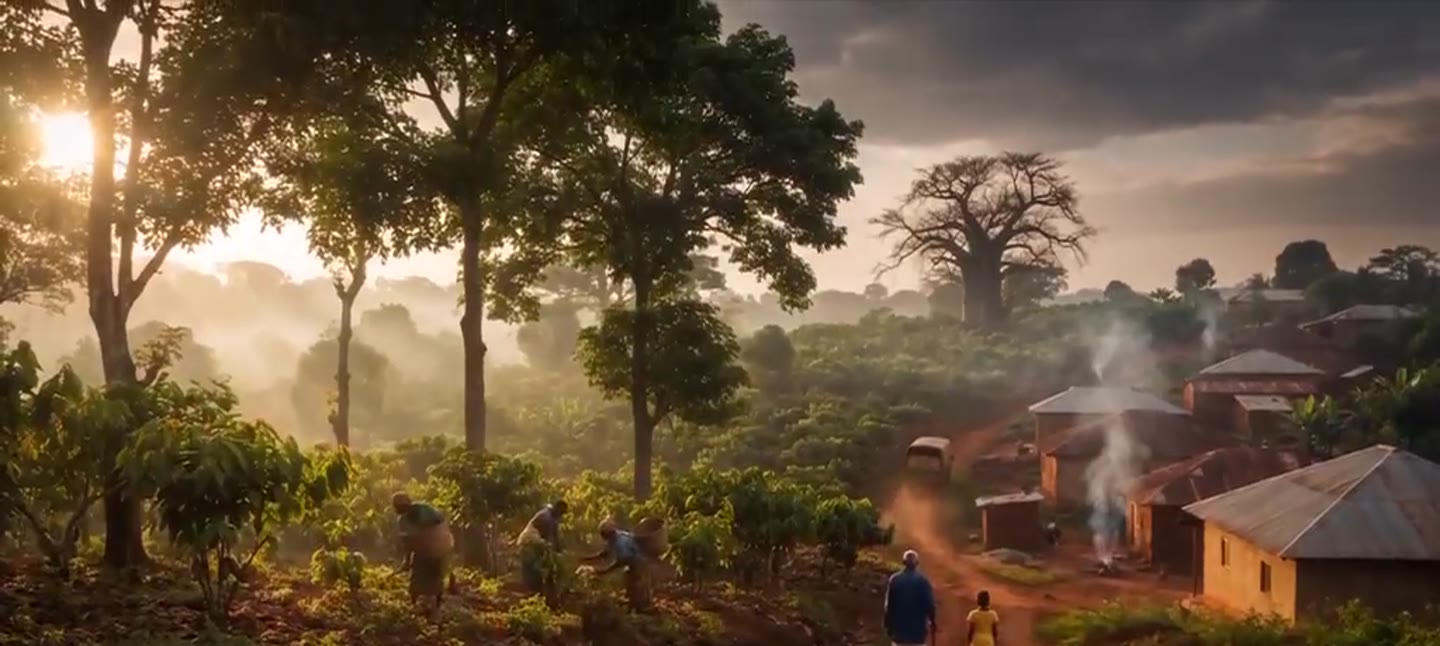


Illustrative scenes from the African Mission 2035 vision film.
We are exploring connected opportunities across the industries and infrastructure that turn resources into economic value.
An initial focus on lithium, with potential application to cobalt, copper and manganese. The proposed corridor model connects traceability and commercial accountability with African participation.
Development focusClearer agreements. Traceable transactions. Greater participation in the value created.The proposed Ubuntu Corridor framework brings commercial clarity and accountability to the relationship between resource holders, operating partners and international markets.
Define the roles, rights and responsibilities of participating stakeholders at the start. Make African participation part of the project’s design.
Develop auditable records and appropriate independent verification so agreed commercial obligations can be measured.
Connect resource development with local procurement, employment, skills transfer and the infrastructure needed for lasting value.
South African born and Swiss based, Khadijah founded SACC to help connect African resource ownership with commercial structures that support wider participation in value creation.
Her background spans accounting and enterprise architecture. Her work focuses on bringing stakeholders together around resource value chains, commercial governance and cross-border partnerships.
Start a conversation“The local transformation of our raw materials is a priority of the Government of the DRC. Its objective is for our country to retain a greater share of the value of its resources, and for the wealth of our subsoil to translate, for our citizens, into skilled jobs and better incomes.”
In my capacity as Congolese diplomat responsible for legal, economic and financial affairs in Berne, I welcome the participation of the Commodity Council in the debate on the future of raw materials in the Democratic Republic of the Congo.
The local transformation of our raw materials is a priority of the Government of the DRC. Its objective is for our country to retain a greater share of the value of its resources, and for the wealth of our subsoil to translate, for our citizens, into skilled jobs and better incomes.
I fully share this ambition. Processing more on Congolese soil means giving our enterprises the means to develop their industrial activities, and giving our young people the opportunity to acquire expertise and apply it in their own country.
It is in this spirit that I encourage the Commodity Council to make the voices of Congolese enterprises, workers and communities heard. Their experience must inform the choices that determine the future of the sector.

Founder & Group Chief Executive Officer
Swiss Africa Commodity Council & Africa Mission 2035
Founding Strategic Partner & Chief Marketing Officer
Africa Mission 2035 — an initiative of SACC
PR agency: Icarus Media — South Africa
Laura@icarusmediagroup.co.za
African Mission 2035 vision film. Imagery illustrates the mission and does not document completed SACC projects.
Explore the thinking behind African Mission 2035 and the ambition to build value that lasts.
For resource holders, industry partners, institutions and media who want to understand or contribute to the initiative.
Bahnhofstrasse 30
6300 Zug, Switzerland